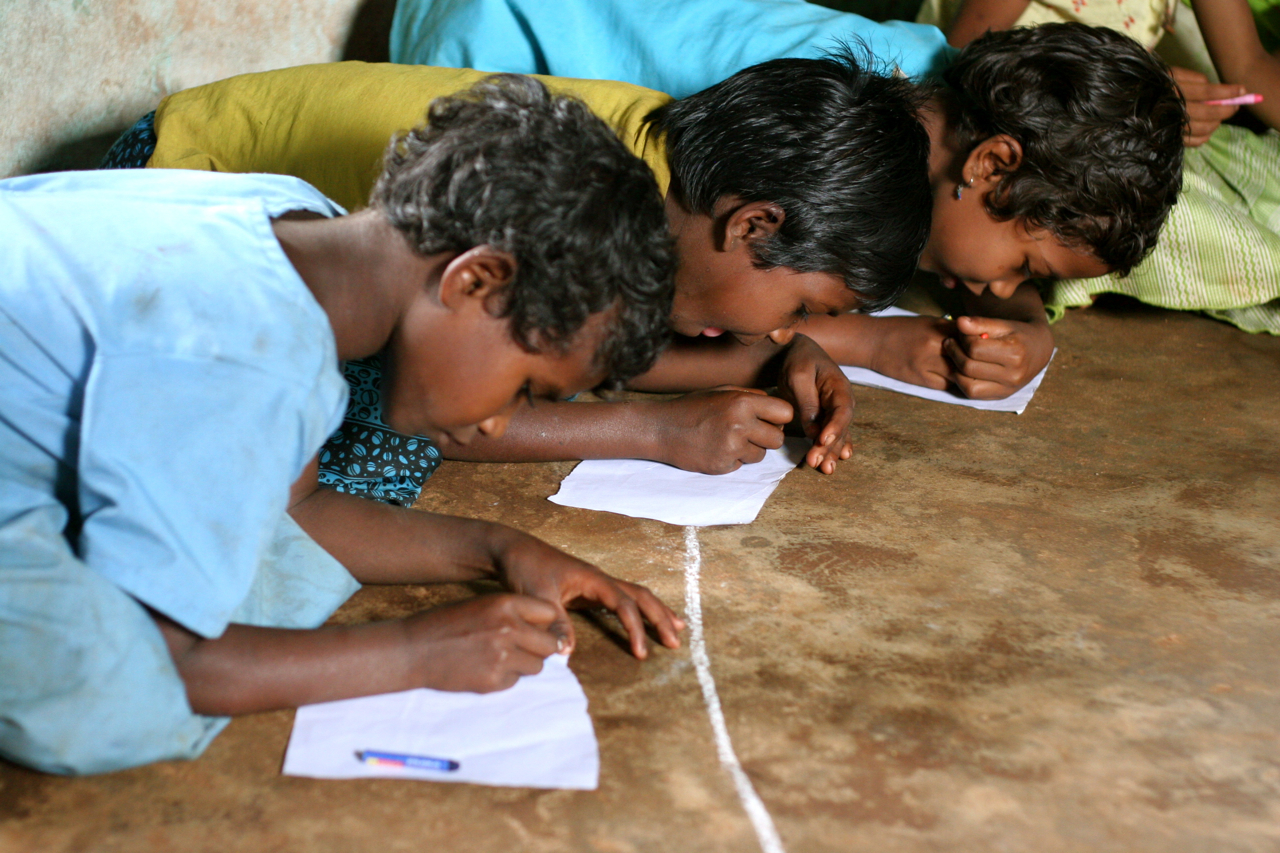
Back to India: In Pursuit of a Book on Development and Child Sponsorship

For February and March 2014, I’m heading back to India to expand my research and writing projects–developed at the Banff Centre last year–into a non-fiction book. The subject: child sponsorship.

What is child sponsorship, you ask? It’s a great multitude of things. It’s the dollar-a-day or so that you donate to a multinational charity to fund development programs in poorer countries in Africa, Asia and Latin America. It’s a complex partnership between donors, international non-profits, indigenous non-governmental organizations (NGOs), urban slums and rural villages, and, of course, children.

It’s a web of good ideas, good intentions, lots of money and a general desire to be a part of global change through local action in the fight against systemic poverty. It is also fraught with misperception, misinformation, misrepresentations and misappropriation. It sometimes looks pretty and feels good, and certainly millions of lives are changed for the better.

In my experience, how it works successfully is usually explained quite well. But how it works poorly–well, that’s where the untold story lies.

The children who write you letters and send you photos that you stick to your fridge are the symbols–the ambassadors to use the contemporary expression–of anti-poverty development. They are also children who have names, identities, struggles, successes, fears and doubts; children who are caught up, mostly unwittingly, in the vast child-sponsorship complex.

I don’t expect to change the world. I only want to tell a story that might change the way we look at it. It’s a story of a place and time; of inspiring people and a few who take advantage of power and privilege; of truth and deception; of our desire to change the world. I hope it’s a story for everyone.

Stay tuned. Contact me for more information.

Photograph: Children at a NGO-supported community centre in Kandhamal, India. (Copyright Richard A. Johnson; photograph taken with the expressed permission of the children and the NGO.)
Aching for the Portage: A Week in Algonquin Park

The first of twenty-four portages feels like chaos, like a summer storm wreaking havoc on a beach; the last, like an old friend comfortably leaning on your tired shoulders.

Everything in between is no more and no less an addictive progression of ache.

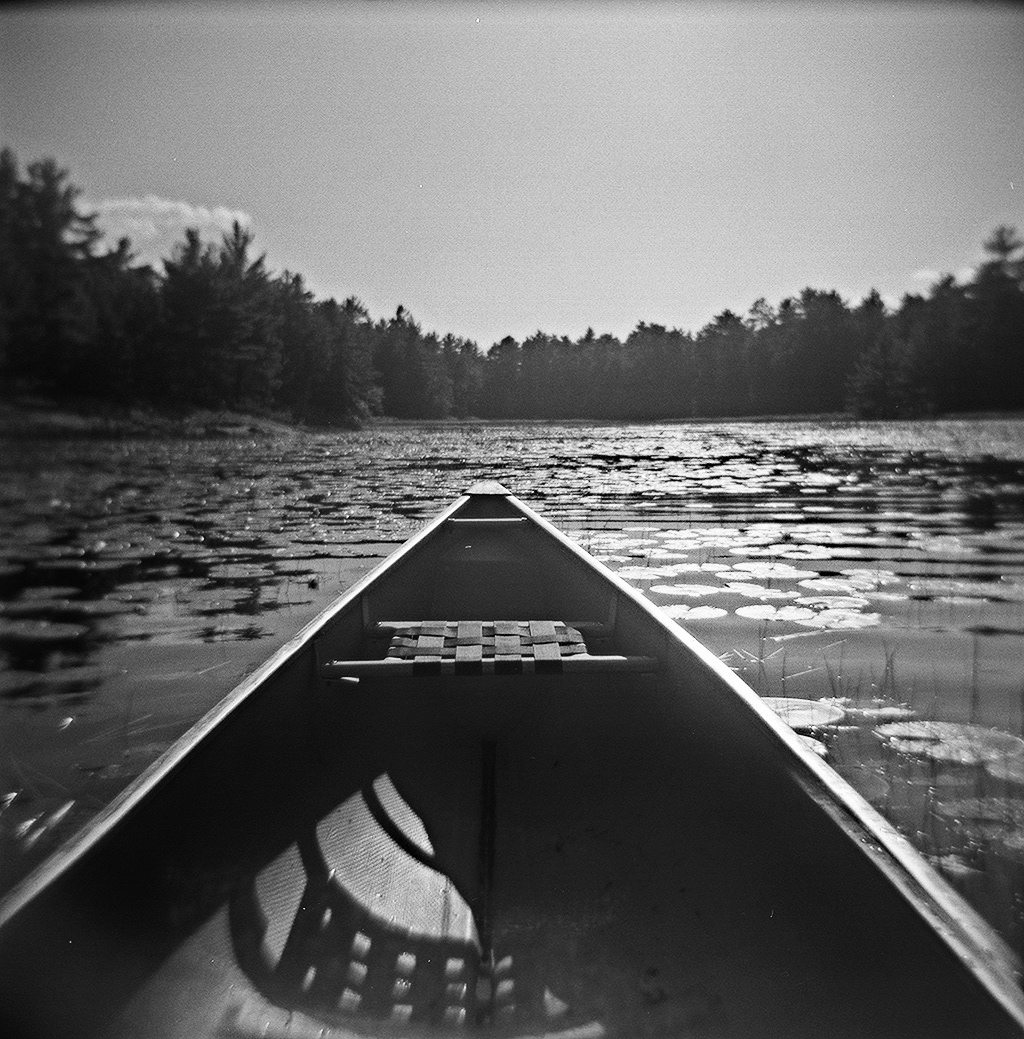
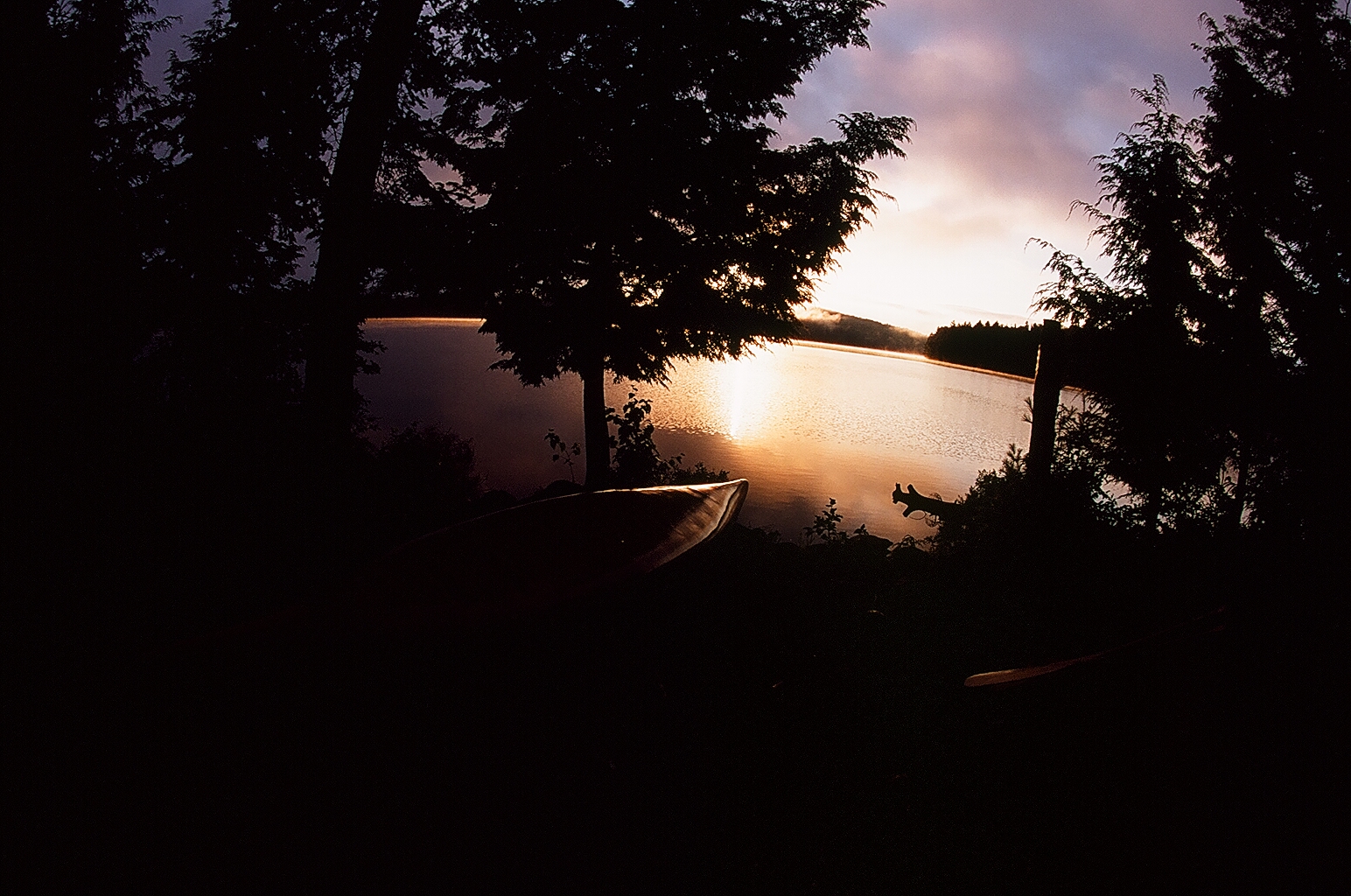
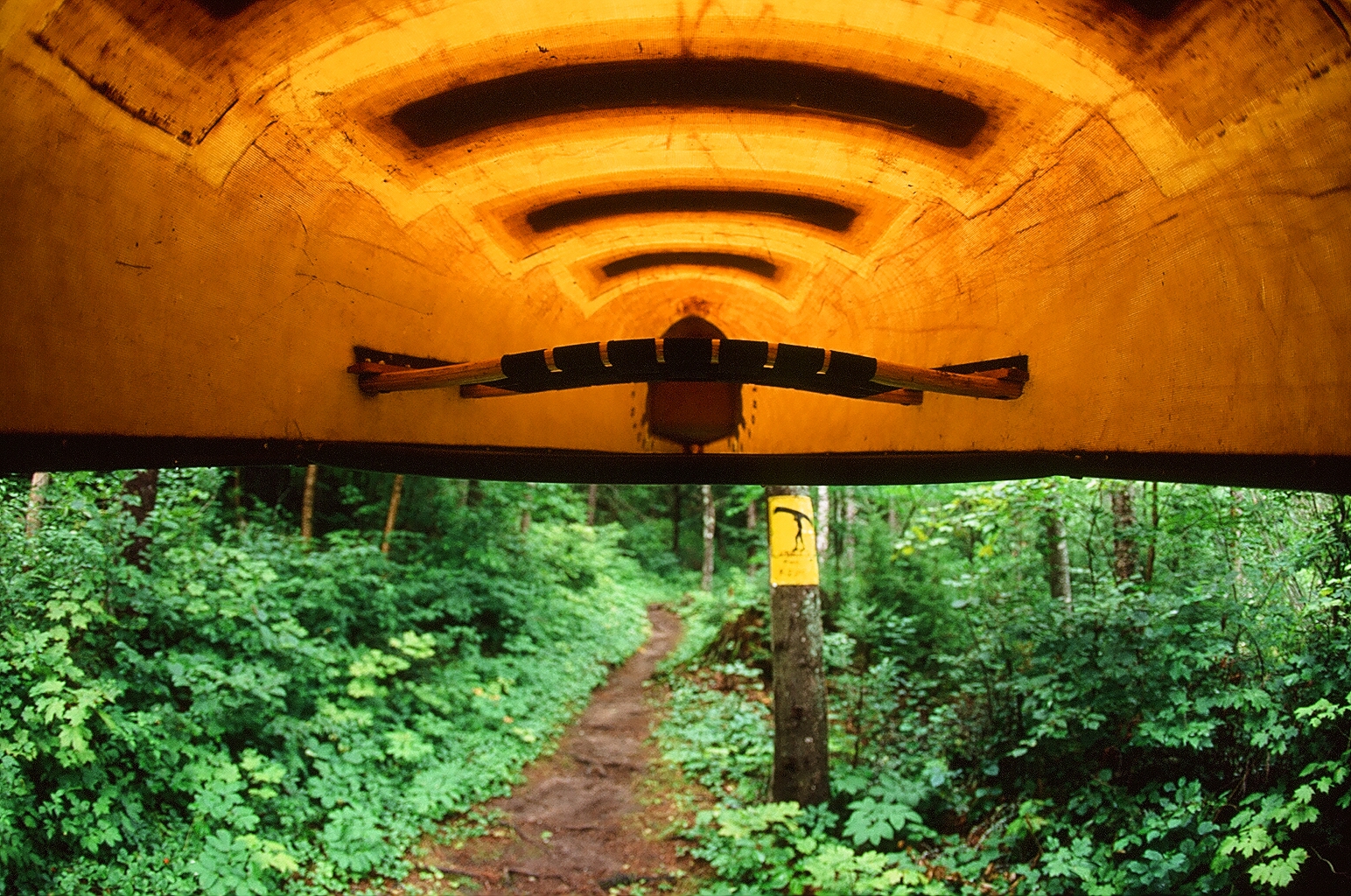
Portager’s view of the trail near Amable du Fond. All photographs (c) Richard A. Johnson.

Before we began our Algonquin paddling adventure, I’d wondered whether the portage ache–the unique stiffening soreness of schlepping first a 55lb backpack and then a 42lb canoe over crooked forest trails as long as 2km in between each lake–would, like its counterpart the alpine ache, come to be felt as both agony and ecstasy.

Continue reading “Aching for the Portage: A Week in Algonquin Park”

Why Greg Mortensen’s shame is on us

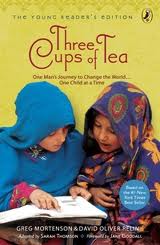
3cupsofteaNow that self-made humanitarian and “stones-into-schools” false prophet Greg Mortenson has been ordered to repay more than $1-million to the charity he founded, exploited and financially mismanaged, it’s as good a time as any to assess the disgraced Three Cups of Tea author and his crumbling empire of goodness.

Here’s a quick recap of Mortenson’s (true) journey:

Continue reading “Why Greg Mortensen’s shame is on us”

Jenin’s Freedom Theatre marks anniversary of founder’s murder

Juliano Mer-Khamis
(photo courtesy Freedom Theatre)

Today marks the one-year anniversary of the murder of Juliano Mer-Khamis — the Israeli actor and co-founder of Palestine’s Freedom Theatre — who died in ahail of gunfire from still-unknown assailants on April 4, 2011, just a few steps from the door of his beloved children’s drama centre in the West Bank refugee camp of Jenin.

Juliano’s murder has been blamed on radical Islamists who may have opposed the Freedom Theatre’s co-educational curriculum of dance, drama, street art and photography, and the elements of cooperation and non-violent peace-building inherent in the joint Palestinian-Israeli, grassroots project.

Continue reading “Jenin’s Freedom Theatre marks anniversary of founder’s murder”

FINCA: Exploitative Fundraising or Successful Direct Marketing?

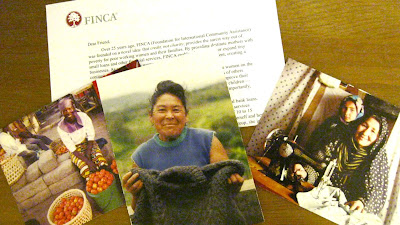
FINCAdmLast week I received an envelope in the mail from the Foundation for International Community Assistance, or FINCA, which consisted of three photographs of women presenting a form of livelihood to the camera, and a letter from FINCA president and CEO Rupert W. Scofield informing me about “micro-entrepreneurship,” “village banks,” and how my “donation of $50 or more” can empower poor women like “Dominga” and “Robinah” (not pictured), whose brief tales of former woe and current hope are offered up as proof of FINCA’s commitment and success.

As an experienced communications manager and advisor in the non-profit/NGO sector, I’m very curious about these kinds of promotions. When I see something like this, there are 5 things that immediately come to mind:

1) Who are the women (and the child) in the photographs?
2) Who is the photographer(s)?
3) Under what circumstances were the photographs taken?
4) Does the letter inform me of how my donation is managed/governed?
5) Am I encouraged to seek out more information before becoming a donor?

So how did FINCA do with respect to these five benchmarks?

Continue reading “FINCA: Exploitative Fundraising or Successful Direct Marketing?”

Adventures in Advenience: The Return of a Photographic Moment

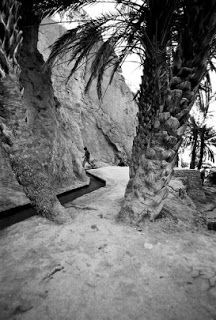
cheb_water405Nine years ago this month I dropped anchor in Tunisia for a six-month contract teaching English at a school in the seaside city of Sousse, packing along with me little besides my old Canon single lens reflex, an 18mm wide-angle lens and a few dozen rolls of Ilford FP4.

I worked six days a week, so when that seventh day came round I was on a bus or a train somewhere into countryside as far as I could get. But it wasn’t till shortly before my departure that I was able to devote an entire week to a voyage into the Sahara, at least to its border towns and not-too-distant oases.

It was a hermetic experience: late May in the foothills of the Atlas Mountains, the Chott el-Djerid salt flats, and beyond them the Sahara — with their mirages, siestas, scorpions and utter lack of tourists — is conducive to isolation and meditation, and I found myself subsisting on a diet of bread, water, the kindness of strangers and contemplations of photography.

Continue reading “Adventures in Advenience: The Return of a Photographic Moment”

101 Icelandic: A Thorough Tongue-Twisting Trek Through a Thwarting Language

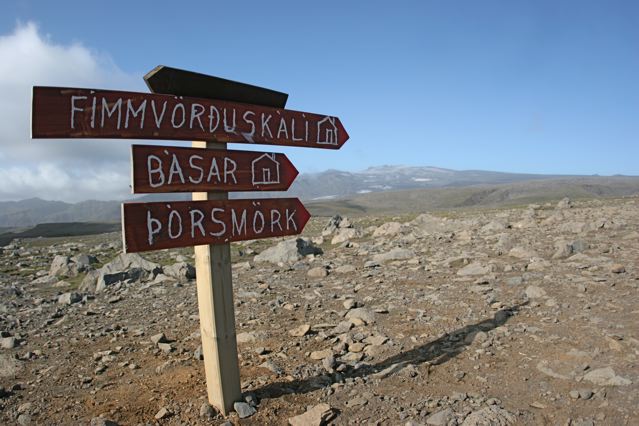
It is possible that the most garrulous person in all of Iceland is a man who spends most of his day alone on a mountain ridge between two volcanoes. Sigurður Sigurðursson is a seasonal warden of a lonely trekkers hut at a place called Fimmvörðuháls, and if you think you can hike up to his domain for a cozy night underneath the aurora borealis without learning how to pronounce Fimmvörðuháls–and without developing an affinity for the Icelandic language–you are sorely mistaken.

It’s simple when you chop it down to the roots, he says (and given the lunar landscape of his realm he’s certainly not talking about trees). Fimm is five. Vörð (pronounced vordh) is cairn. Háls is neck. The Neck of the Five Cairns. That’s where we are.*

Continue reading “101 Icelandic: A Thorough Tongue-Twisting Trek Through a Thwarting Language”

I, uh, Felt a Jokull (and other Icelandic things)

It had to be high on the list of places to visit in Iceland: Eyjafjallajökull, the ice cap and eponymous volcano that just a year ago erupted with more fury than a stampede of sheep, spewing clouds of ash across Europe and sending air-traffic controllers on a long-sought holiday (by train, of course).

How could one visit the land of jökulls and not deposit a soft, black footprint on the slopes of this tongue twister (“aye, if yet, la yokel”), if only to ensure that, at least at one particular moment, nature has relaxed its cycle of self-correction long enough for us humans to venture out of our caves?

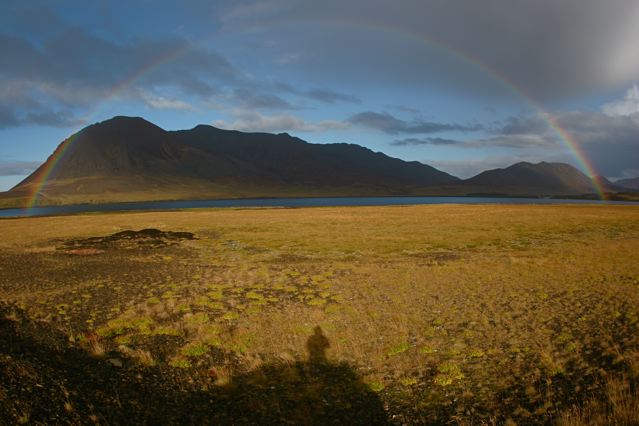
In Iceland the natural world certainly has a way of reminding us not to take it for granted. Maybe it’s the way the sun always seems so distant, at a languid low angle, as though Terrence Malick is in control of the lighting. Maybe it’s in the wind, which blows up, down, warm, cold, east and west, seemingly all at once. Maybe it’s the absence of trees, a taut lesson that what goes down doesn’t always come back up.*

Terrence Malik was here.

Or maybe it’s the way those infamous volcanoes keep all but the most brennevín-sodden of Icelanders (and the rest of us) continually on their toes.

Thus, climbing up and setting foot on Eyjafjallajökull is sort of the human way of letting nature know that, hey, point taken.

Continue reading “I, uh, Felt a Jokull (and other Icelandic things)”

Discovery with a Paddle: Canoeing the Restoule and French Rivers

When Samuel Champlain paddled down the Restoule River with a party of Ottawa nation aboriginals in the early seventeenth century, he believed he was beating a trail of discovery to a great, westward river that would lead to the mer de l’ouest, the ocean on the far side of what was, to Europeans, a new found land.

Photograph (c) Richard A Johnson
All photographs (c) Richard A Johnson

In the Canada of Champlain’s peers, the frontier emerged from obscurity beneath each footstep and paddle stroke of he and his men. What became known as the French River was the first of many underestimations of Champlain, who was by all evidence one of the more gifted of the early European explorers of North America.

Champlain stood at the confluence of the Restoule and French Rivers and believed the latter flowed over the western horizon to the salted sea. (No doubt his indigenous guides, who may never have come across anything but fresh water during their inland lives, struggled in translation with this alien concept of saltwater.)

Champlain was wrong. But in his wrongness, he made if not a discovery then at least a revelation.

Continue reading “Discovery with a Paddle: Canoeing the Restoule and French Rivers”

Oh Aubergine: Etymology of an Eggplant

In India I learned most of the local language at the School of Hard Knocks, otherwise known as the vegetable market. Elbowing my way through the horde of pickers, it was:
“I’ll take that one, what do you call it?”
Brinjal.
Ach-cha, I’ll take chaari.”*
What do they call them in your country?
“Aubergine. Or sometimes eggplant.”
Egg. Plant?

The vegetable in question is native to southern India, where it was originally known as vatinganah (in Sanskrit). Legend holds that this word, broken up, literally means “fart, go away!” But this ain’t true.

From India the purple perennial travelled west and became badinjāna (Persian) and الباذنجان  (al-badhinjān; Arabic). In the 11th century Ibn Sina (aka Avicenna) observed that the badhinjān generates melancholy and obstructions.

In some modern Arabic dialects the word passes the ears as baydhinjān, which sounds like it derives from “egg” (baydh) or “house” (bayt) “of the devil” (ad-djinn).**

The veggie encroached upon Europe from two sides. In the west, Arabic influence led to the Spanish berenjenafrom whence came albergínia (Catalan) and aubergine (Middle French).

Continue reading “Oh Aubergine: Etymology of an Eggplant”